What happens when children are given
more of the world?

Flipside
What happens when children are given
more of the world?
Education is the process of becoming more capable of meeting the world. Children grow when they are given the chance to think for themselves, make decisions, take responsibility, and learn from what happens next. We believe this is at the heart of education: giving children experiences that stay with them and shape who they become.
Before children can explore the world, they need to feel at home within themselves. We believe wellbeing is the foundation for curiosity, confidence, and growth. Through nourishing food, restorative sleep, time in nature, movement, and moments of stillness, we help children stay connected to their bodies and emotions. The magic often comes from the balance: the excitement of a new experience, the calm of a quiet moment, and the time to let it all sink in.
A child's ability to manage emotions and bounce back from a hard moment depends heavily on a stable physical baseline. Research on resilience in adolescents links emotional regulation directly to rest and stress recovery (Resilience and emotion regulation, Frontiers). Separately, research on awe and wonder finds that children are naturally more open to it than adults are, and that unhurried moments in nature calm the nervous system while building a sense of meaning and connection (Awe and children's spiritual growth, John Templeton Foundation; Nature and children's spirituality, Children & Nature Network).
Children learn deeply when ideas become things they can see, touch, test, question, and use. Experiential learning is learning through direct experience, actively doing something, reflecting on what happened, making sense of it, and applying that understanding to what comes next. This cycle allows children to build knowledge, connecting what they learn with the world around them and making that understanding more durable and transferable.
Experiential learning is an established approach in learning science, rooted in the work of John Dewey and David Kolb (Kolb's experiential learning model). Research describes it as a process in which learners actively participate in meaningful experiences and transform those experiences through reflection, conceptual understanding, and further experimentation. A systematic review of experiential learning research identified active participation, real world context, inquiry, and critical reflection as central features of meaningful experiential learning. For children aged 4 to 14, a rapid evidence assessment of 88 studies found positive effects associated with experiential learning approaches across motivation, engagement, agency, wellbeing, and academic achievement, with particularly strong evidence for science and mathematics achievement (Experiential Learning for Children Aged 4–14, UCL). A separate review of 44 peer reviewed studies also found an overall positive impact on children's academic achievement.
Children build confidence when they experience themselves as capable, not when every decision is made for them. We give children meaningful ownership over their choices: navigating unfamiliar places, managing a budget, solving real problems, and setting personal goals they genuinely care about. Through the process, they develop self-direction and resilience. Because confidence does not come from being told “you can do it.” It comes from repeatedly experiencing “I chose this, I worked for this, and I made it happen.”
Self-determination theory, one of the most well-established frameworks in motivation research, identifies autonomy as one of three basic psychological needs that drive confidence and wellbeing (Self-Determination Theory, APA). Studies on independent play and mobility show that letting kids take on real responsibility builds executive function and self-regulation, while over-managing kids is linked to them believing outcomes are out of their hands rather than in them (Risky and independent play, PMC; Overparenting research, ResearchGate). Developmental psychologist Erik Erikson also identified a sense of accomplishment as the central task of middle childhood, which is why goal-setting is built into this age group specifically (Erikson: Industry vs. Inferiority).
Children are not shaped by what they simply see, but by what they actively engage with. Research in cognitive science shows that learning deepens when children ask questions, make connections, explain ideas, and reflect on their experiences rather than passively consume information. We design each day around curiosity, encouraging children to ask why, what, and how. Experiences become meaningful when they are followed by reflection: discussing what happened, what they noticed, and what they would do differently next time. Because an experience alone creates a memory; reflection transforms it into understanding.
Learning theorist David Kolb's experiential learning cycle shows that experience only becomes real learning when it's followed by reflection (Kolb's experiential learning cycle, ScienceDirect). Research on youth travel programs backs this up directly, simply being somewhere new didn't predict growth in kids' cultural understanding, but structured, curiosity-driven engagement with the place did (Study abroad and intercultural competence, ScienceDirect).
Growth is not defined by the outcome alone. We value effort, persistence, experimentation, reflection, and improvement over winning, finishing first, or getting it “right.” We celebrate how a child worked through a challenge more than whether they solved it: the questions they asked, the attempts they made, the setbacks they pushed through. Through this lens, mistakes stop being something to avoid and become something to learn from. Because a child who is only praised for the result learns to fear failure. A child who is praised for the process learns to keep going.
Carol Dweck's research on praise found that children praised for effort chose harder challenges and persisted longer after setbacks, while children praised for ability or outcome became more likely to avoid difficulty and give up when things got hard (Mueller & Dweck, Columbia University; Dweck on praise and motivation, Stanford GSB). Later research on vocational and applied learning settings confirms the same pattern holds outside the lab: effort-based feedback builds persistence in real tasks, not just test performance (Effort vs. intelligence praise, vocational education, Taylor & Francis).
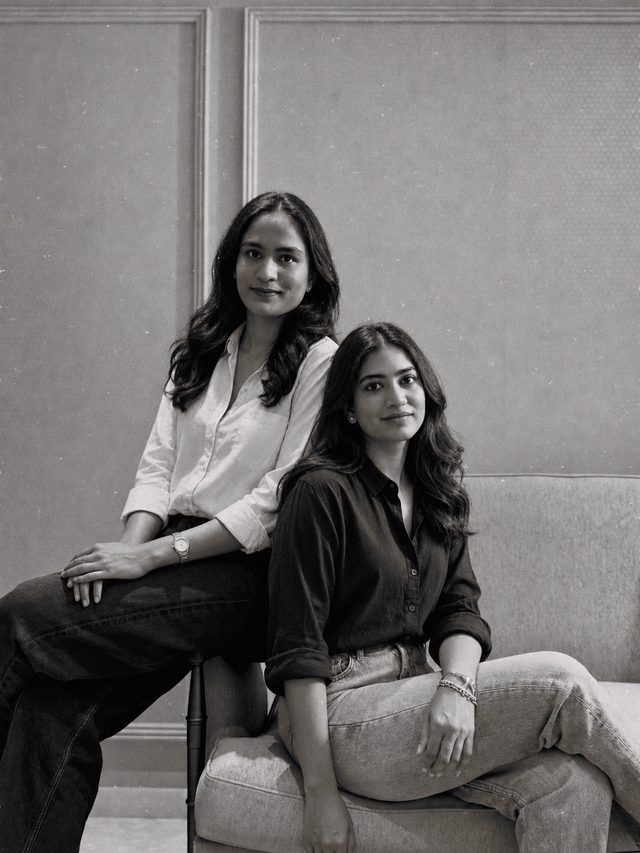



Flipside started with a conversation about the kind of childhood we'd want for our own children. We talked about the little things we hoped would come naturally to them one day. Curiosity. Courage. Empathy. Independence.
We were both the kind of students teachers loved. We loved learning and did well throughout school and college. And yet, some of the experiences that shaped us most happened outside the classroom. We realised we learned the most when nobody was giving us the answers: when we had to take responsibility, solve problems, explore, and trust ourselves.
That's why we created Flipside. Because we wanted more of those experiences for children growing up today. Not just to see more of the world, but to discover more of themselves.
Thanks for reaching out. Our team will get back to you within 1–2 business days.